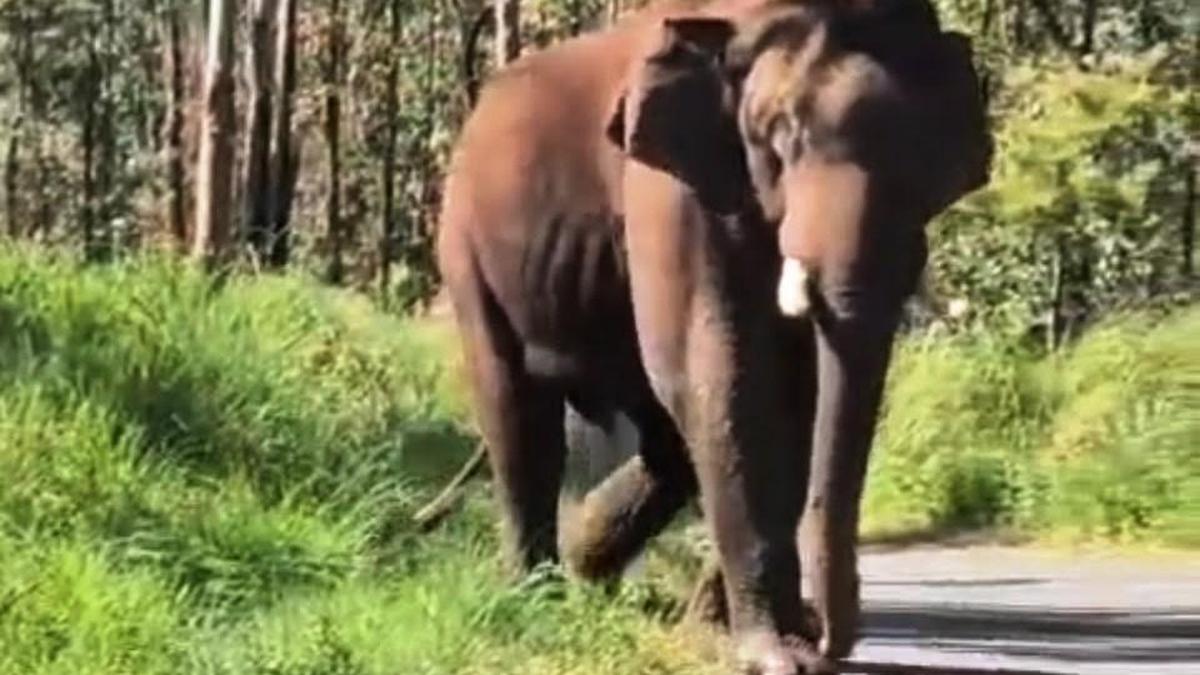
A four-member expert panel constituted by Idukki District Collector Dineshan Cheruvatt in September has found that removing or translocating wild elephants does not resolve human-elephant conflict in Chinnakkanal, amid demands from residents and farmers groups to relocate the tusker Chakkakompan. The panel includes P.S. Easa, former Director of the Kerala Forest Research Institute and a member of the International Union for Conservation of Nature's Asian Elephant Specialist Group; Rajan Pilakandy, a scientist at the institute; Jomy Augustine, a retired Professor and former Head of the Department of Botany at St. Thomas College, Pala; and Murukesan, a tribal community member from Chinnakkanal.
According to reports, the report noted that the earlier translocation of a tusker known as Arikomban from Chinnakkanal to reduce conflict, and the death of another tusker named Murivalan while travelling its traditional path toward Suryanelli, did not alleviate the conflict. "The removal of these two 'problematic' elephants did not alleviate human-elephant conflict in Chinnakkanal," the report stated. "This indicates that removal of elephants is not a solution to the human-elephant conflict in the landscape." Instead, the panel recommended attaching a radio transmitter to any identified "problematic" elephant to monitor its movements.
The panel recommended planting reeds in the valleys of Mathikettan Shola National Park, where a rapid habitat assessment revealed a shortage of food, to encourage elephants to spend more time inside the park. It called for regulating high-intensity lighting at resorts in Chinnakkanal, specifically naming Mahindra Serene, Club Mahindra and Sterling resorts, and said frequent night safaris should be banned and noise-making activities at tourist facilities regulated. On road safety, it found that elephants cross the Gap road stretch of the national highway at specific locations and recommended speed limits in those zones and advanced warning systems.
The experts criticised the Rapid Response Team's current practice of driving elephants away based on public demand and advised against scaring wild elephants at any time, urging teams to focus on monitoring and alerting residents. To ensure unimpeded elephant movement, the panel recommended removing fences around the Thachangari estate, which block passage from the Anayirankal reservoir to upper Suryanelli via the 60-acre shola. It noted that solar fences are being installed indiscriminately along plantation boundaries and urged officials to prioritise protecting human settlements, and said encroached and degraded lands in the Anayirankal reservoir catchment area, along with leased tribal areas and revenue lands, must be cleared of encroachments and restored. According to Forest department data cited in the report, wild elephant attacks have killed 34 people in the area since May 2010, and since 2021-22 the department has spent heavily on solar fencing and allocated ₹17,565,490 to the Rapid Response Team for wages, equipment, vehicle maintenance and camp rations, yet attacks and fatalities continue. The panel suggested a contextual analysis of all death incidents in Chinnakkanal so that such incidents can be avoided in future.