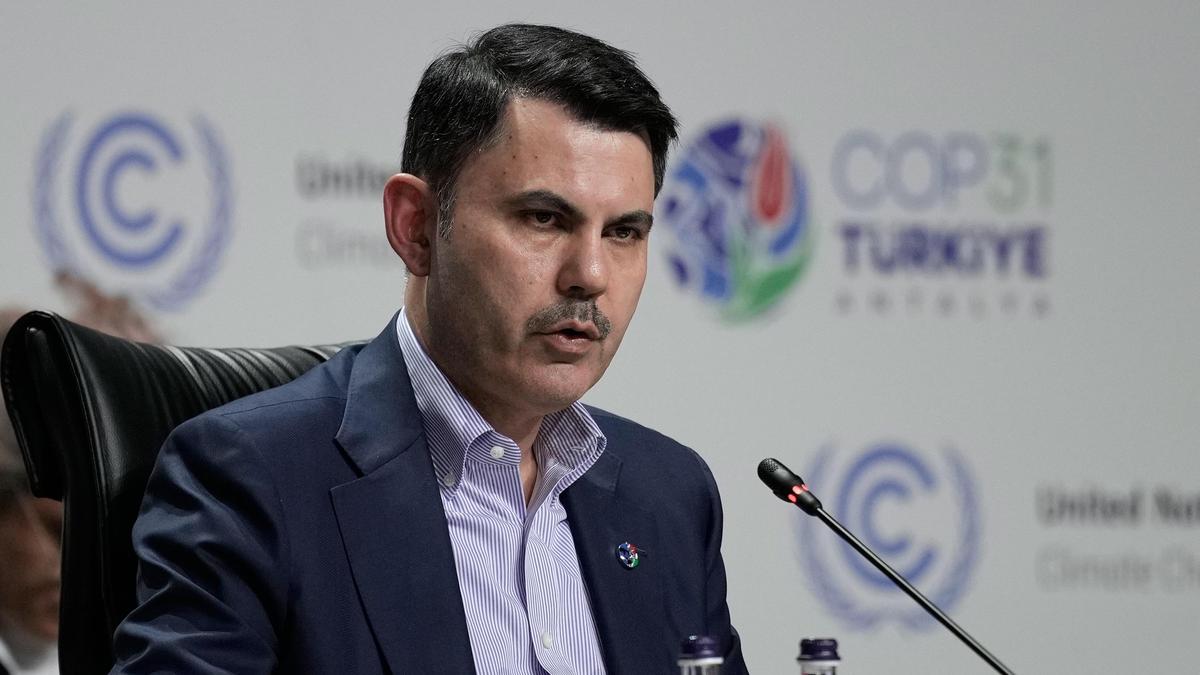
The latest proposed agreement at the UN climate summit in Antalya, Turkiye, does not mention fossil fuels or call for a transition away from coal, oil and gas, even as the conference runs past its scheduled November 20 close. The draft, released in the early hours of Sunday by Turkish Environment Minister Murat Kurum, who heads COP31, gives negotiators about three hours to raise objections before it goes to the plenary, where near-unanimous consensus is needed. Several countries had earlier objected strongly to dropping a phase-out call.
The 10-page text refers to the 2023 UAE Consensus in its first line but contains no mention of "fossil," "oil," "coal" or "phase out." It does set a goal, backed by the oil industry, on capturing and storing carbon pollution. It also calls for raising the share of electricity in total final energy consumption to 35% from about 21% now by 2035, Turkiye's signature effort. Activists sought a provision limiting that electricity to renewables, with climate scientist Bill Hare warning that electrification running on coal and gas does not limit warming. Turkiye and the International Energy Agency said that with 80% of new electricity from renewables, emissions will fall regardless.
Panama has vowed to formally object to any final agreement that does not cap oil production, acknowledge failing warming goals and strengthen finance for adaptation. Its environment minister, Juan Carlos Navarro, said the talks were being held hostage by a "petroleum mafia" and need reform. Analyst Alden Meyer of the E3G think tank said fossil fuels went unmentioned in final decisions for more than 25 years, largely due to objections by Saudi Arabia, and that exiting with no signal of seriousness about the Dubai pledge would be a real setback. Organisers worry that a voting quorum of two-thirds of delegates may not be met as negotiators leave. Many developing countries sought an explicit baseline for tripling adaptation funding but did not get it.