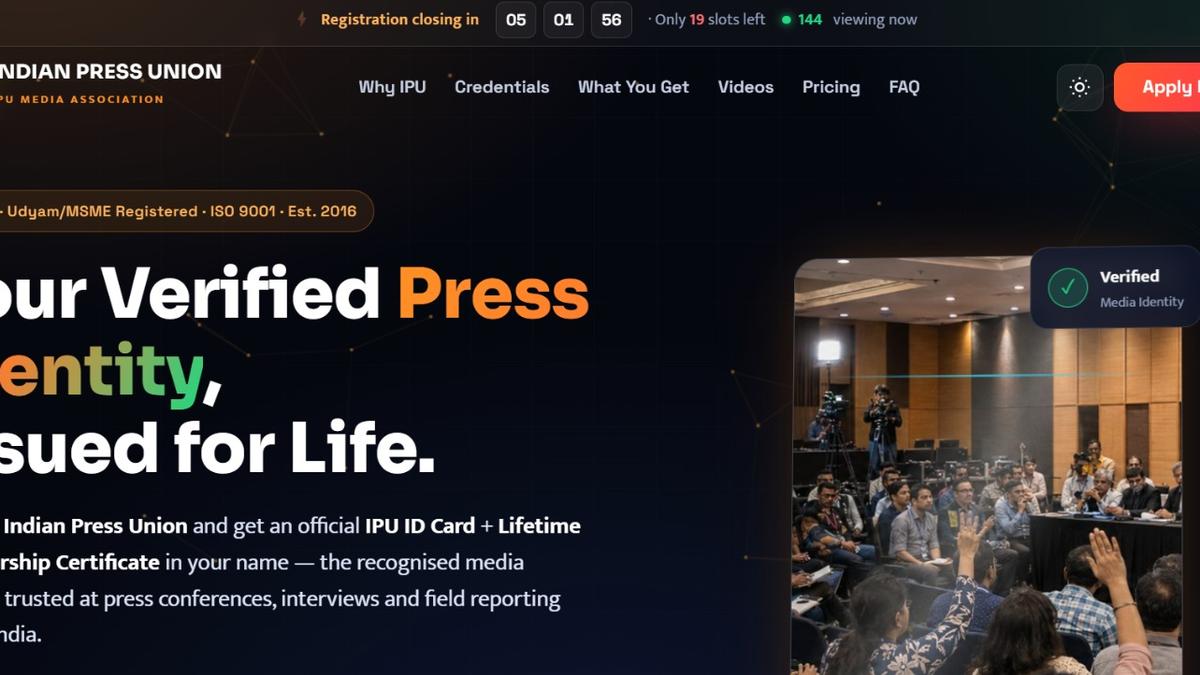
A website offering "lifetime press identity cards" for up to ₹1,799 has drawn scrutiny, with media bodies questioning the credentials of the organisation issuing them and the implications of commercially selling identification linked to journalism. The Indian Press Union (IPU) offers digital membership for ₹999 and physical membership for ₹1,799, promising a "verified IPU ID Card" and a lifetime membership certificate after an online application and KYC verification using Aadhaar. Applications are claimed to be reviewed and approved within 24 hours of verification.
The concerns gained prominence after the Delhi Police flagged individuals carrying cards issued by the platform during the anti-SIR protests in October but could not establish the organisation's authority to issue them. According to Sanjay Bhatia, Chief of the Delhi Police's IFSO, some people identified themselves as independent journalists during the protests but were later seen raising slogans and participating in the demonstrations, and several were carrying fake press identity cards. "We did not know whether it was a statutory body authorised to issue such identification cards," the official said.
R Srinivasan, senior journalist and member of the Editors Guild of India, said he had not heard of the Indian Press Union. He said such practices were "a direct attack on the reputation of the profession" and that press cards are generally issued through the government's accreditation system via the Press Information Bureau or by media organisations to their employees. Sangeeta Barooah Pisharoty, president of the Press Club of India, said the organisation was unfamiliar to the press body and that the sale of such cards was worrying at a time when the distinction between journalists and digital content creators was already being debated. She said the issue needed wider consultation within the media fraternity, including scrutiny of the rules under which such organisations were registered.
The concerns follow the Delhi Police's November 16 affidavit before the Supreme Court, in which it questioned whether social media content creators could claim the same protections as bona fide journalists. Media representatives have cautioned that identity cards issued by private organisations cannot automatically be equated with government accreditation or proof of professional journalistic credentials, and have called for greater scrutiny of organisations charging individuals for membership and press identification.