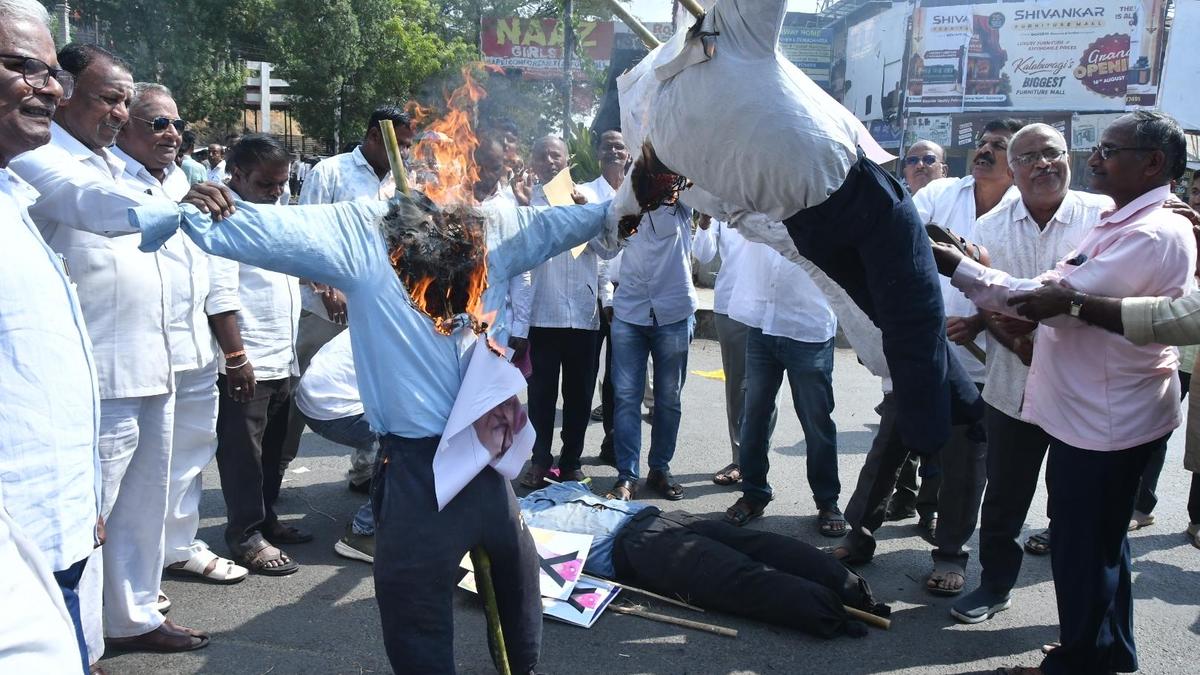
The Karnataka Cabinet's decision to forfeit copies of Basava Mantapa, by NRI author Ravi Hanj, over alleged derogatory remarks against the 12th-century social reformer Basavanna has revived the debate on whether banning or forfeiting books is the right approach. The book is not the first to face such action in the State; at least six books have been banned or forfeited in Karnataka post-Independence, mostly over hurt religious sentiments, and courts have upheld such decisions in the past, including in the case of Dharmakarana by P.V. Narayana in 1997 and Dhundhi in 2013.
Several writers, while opposing the book's contents, argue that no book should be banned. Banjagere Jayaprakash, whose book Aanudeva Horaganavanu was banned in 2007, said the answer to any book should be another book, though he added that intent, language and academic rigour matter. Yogesh Master, whose novel Dhundhi was banned, said a ban deprives the academic world of the chance to read and debate a work, and that a book loses credibility when exposed as hollow rather than through prohibition. He added that Mr. Hanj's statements amounted to a cultural insult to Kannada, as Basavanna was not only a Lingayat religious leader but a socio-cultural icon of the State.
Arvind Narrain, president of the People's Union of Civil Liberties, Karnataka, said the Constitution allows a ban or forfeiture on three grounds: national security, threat to public order and threat to public morality. Noting that the forfeiture notification is not yet out, he said the government has evidently invoked threat to public order, relevant sections of which were used in the four FIRs registered against the author. He questioned whether the protests seen across the State amount to a threat to public order that the government cannot handle, and said banning a book was the language of an oppressive State.
Senior writer K. Marulasiddappa said that while banning a book was in principle unacceptable, disturbance to public order was a valid ground, and that the line blurs when the writing borders on hate speech. Mr. Narrain suggested the State file FIRs under hate speech provisions against such persons instead. The Bengaluru City Police recently stopped the staging of the play Gandhi Hatyeya Satya by Addanda C. Cariappa following protests, during which the playwright was smeared with ink; a complaint alleged the play portrayed Mahatma Gandhi in a derogatory manner. Poet and playwright Raghunandana said that while the play can be criticised, smearing ink on the playwright and forcing the police to suspend its staging was not right, adding that this gives the State space for censorship.