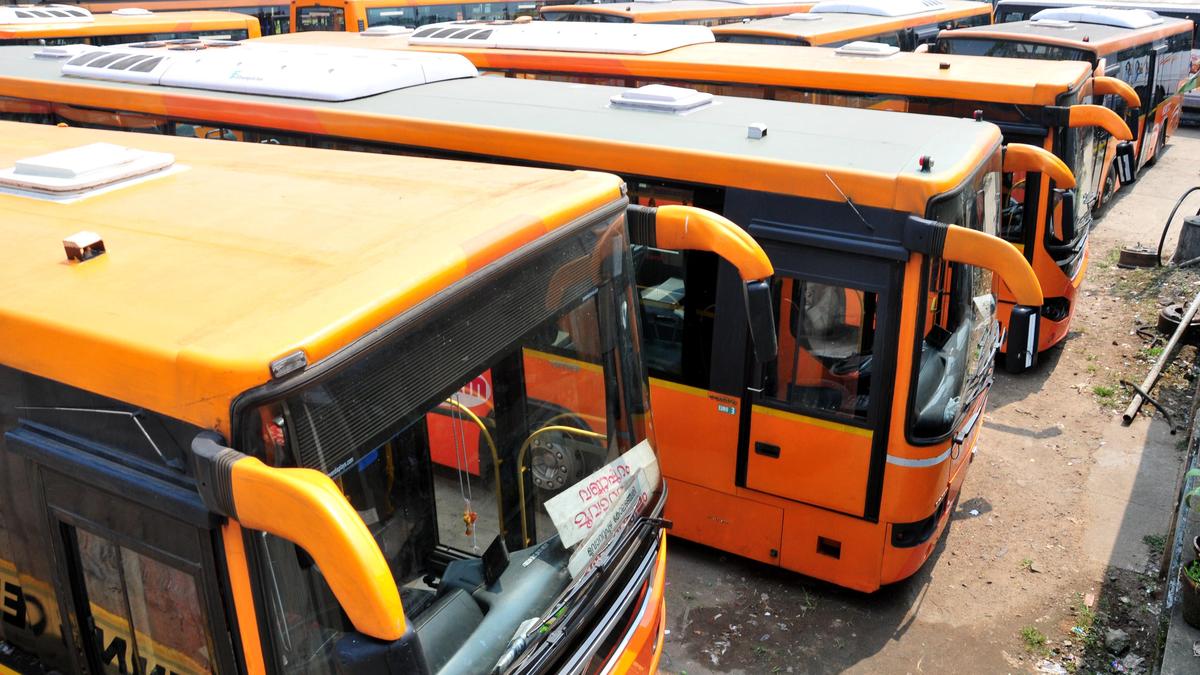
Demand is growing in Kochi for the reintroduction of an adequate number of air-conditioned city buses, following the withdrawal of the KSRTC’s fleet of over 50 Volvo AC low-floor buses from the city over the past decade. Many of these buses were diverted to long-distance routes, while most of the KSRTC’s non-AC low-floor buses had to be scrapped due to improper upkeep, according to the original report. Barring the 15 AC feeder buses operated by Kochi Metro Rail Limited from select metro stations, such services are absent in the rest of Kochi and in suburban towns.
Former Mayor K.J. Sohan, a strong advocate of public transport buses, said AC buses of different sizes are needed on both arterial and side roads, with smaller buses deployed along narrower byroads. He said the AC low-floor buses were diverted to long-distance and inter-district routes although they were designed exclusively for city use, and that they would have been useful for feeder trips to metro stations on the Aluva-M.G. Road-Thripunithura corridor after the Kochi metro began operations in 2017. He added that the State government refused to hand over the buses to the Kochi Corporation even though councillors staged a dharna at the KSRTC bus station demanding it, and that the National Transportation Planning and Research Centre (NATPAC) conducted a study of potential routes for the civic body.
Citing worsening congestion, reckless driving by private buses causing accidents and frequent violent incidents involving bus crew, Mr. Sohan said it is time the State government permitted both the KSRTC and private bus operators to introduce AC buses in the city, with a higher fare structure readied for this. He also pointed to the potential for direct AC bus services from Fort Kochi to Thripunithura and Kakkanad through the Kundannur Bridge-Vytilla stretch, and for such buses on the densely populated Chellanam-Munambam corridor.
Former motor vehicle inspector Bijulal Ram said a good share of traffic problems and accidents in cities like Kochi could be mitigated if an adequate number of passenger-friendly buses and AC city buses are introduced. He said care must be taken that they adhere to the AIS-052 bus body code and have pneumatic doors, and that digital fare collection and a passenger information system would help draw commuters away from two-wheelers and cars and curb incidents between passengers and bus crew over fare collection. Public transport enthusiast Santosh Thannikkat cited the need for a comprehensive plan to augment the city’s bus network and service quality, and said buses that now operate mostly along arterial roads and beneath the metro corridor should extend their operations to less connected corridors.