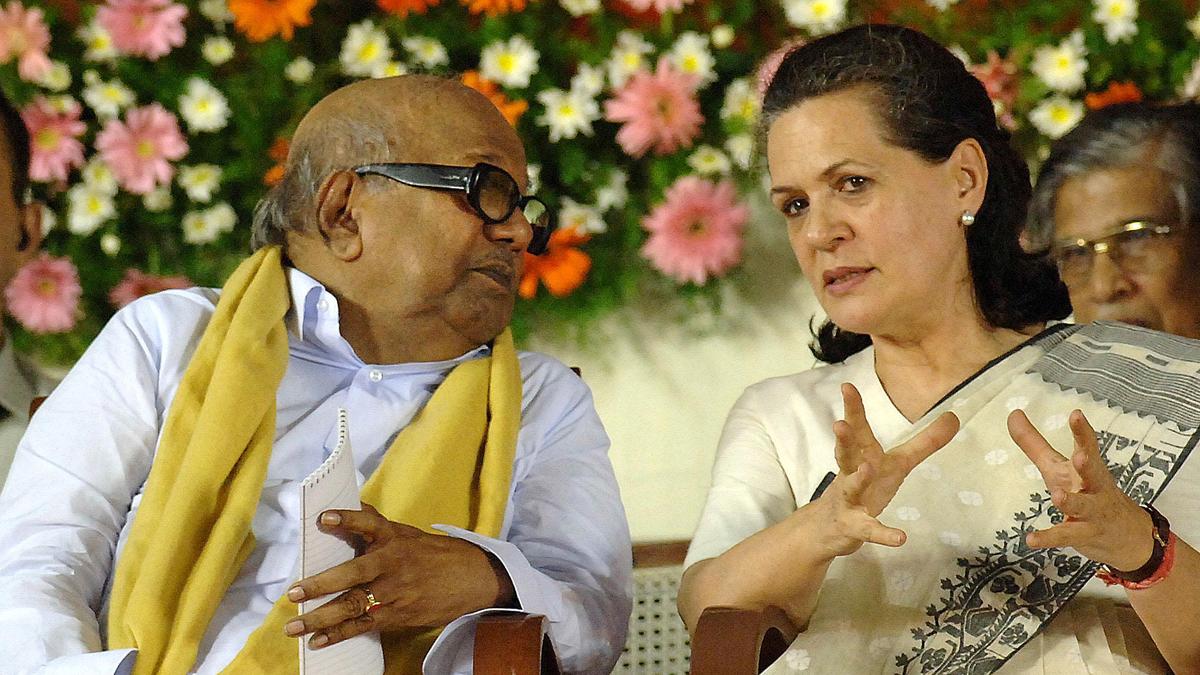
Congress leader Sonia Gandhi has recounted the difficult personal dilemma she faced before agreeing to ally with the DMK ahead of the 2004 parliamentary elections, describing it as her "most challenging personal assignment." In her memoir, Belonging: A Journey of Love, she writes that she was initially wary of the tie-up because the assassination of her husband and former Prime Minister Rajiv Gandhi by the LTTE weighed heavily on her mind.
According to the memoir, the Congress and the DMK first came together in 1971 and again in 1980, and later joined hands as part of the nationwide United Progressive Alliance formed in 2004. Gandhi writes that the DMK, then led by M. Karunanidhi, was reportedly unhappy with the Vajpayee government, and she saw it as the right moment to make contact, since the DMK was the most important party in the south among the forces needed to challenge the BJP.
She recalls sensing that some of her colleagues from Tamil Nadu were keen on an alliance but did not know how to raise the subject with her. She notes that at the time of the 1991 election, DMK cadre had been vocal supporters of the LTTE, the terrorist group that killed Rajiv, and that some in the party had openly threatened him.
The memoir also recalls the Congress's decision to withdraw support to Prime Minister I.K. Gujral's government in November 1997, after the Jain Commission's interim report, which inquired into Rajiv Gandhi's assassination, criticised the DMK for its alleged support to the LTTE.