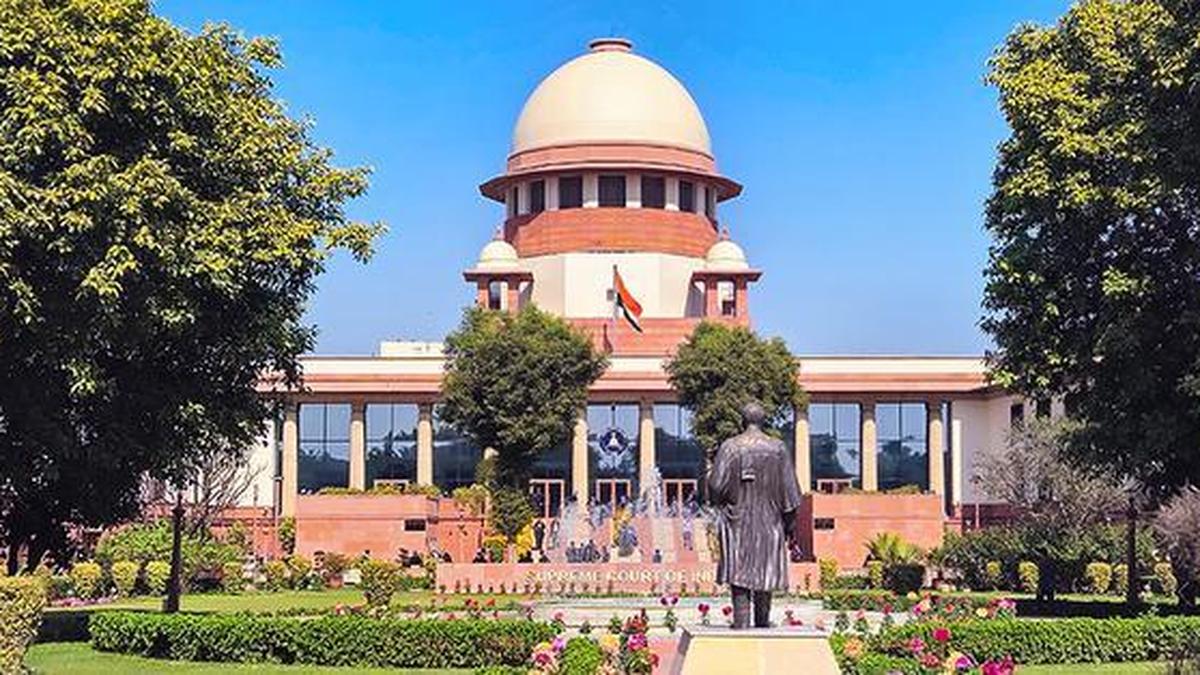
The Supreme Court on Monday (November 23, 2026) observed that unauthorised constructions often flourish with the "active connivance" of civic authorities, who hope State governments will regularise such structures, particularly ahead of elections. A Bench of Justices B.V. Nagarathna and Sanjeev Sachdeva sought suggestions from States and Union Territories on tackling "flagrant" violations of building bye-laws.
The court remarked that municipal inspection in cities is "in shambles" and often undertaken only after a building has come up, making the violation a fait accompli, and described such inspections as "a sham". It also restrained municipal authorities from issuing directions contrary to its orders, warning that any interference could invite contempt proceedings.
The Bench was hearing a case from Tamil Nadu concerning construction in violation of land-use norms and building bye-laws, which had earlier been expanded to examine similar violations nationwide. Pointing to "practical difficulties" in monitoring violations across the country, the court noted that differing laws and bye-laws in each State and Union Territory made omnibus directions impractical. Justice Nagarathna cautioned that sweeping orders could lead private parties to approach the top court for relief, while authorities might use them to override stays and directions of tribunals or High Courts.
The Bench confined the proceedings to seeking suggestions from State governments on tackling flagrant violations and civic inaction, and directed parties to seek relief in individual cases before appropriate municipal authorities, tribunals or High Courts.