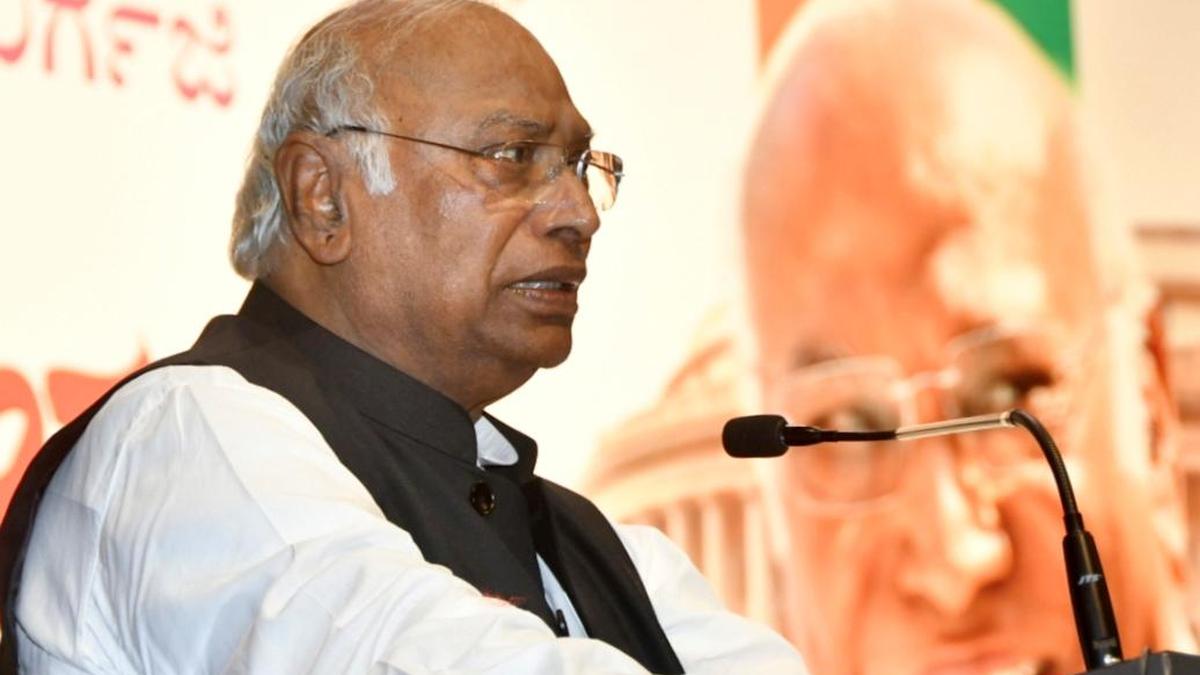
Congress president Mallikarjun Kharge on Wednesday attacked the Centre over findings of the ICMR-SAMPADA survey on anaemia and malnutrition, asking where accountability lies after 12 years of the Modi government. Citing the report, he said 55.9% of women of reproductive age are anaemic, 42% of children aged 1-4 years are anaemic, and nearly two-thirds of adolescents are deficient in Vitamin B12. In Gujarat, he said, 66% of women of reproductive age and 57% of young children are anaemic.
Mr. Kharge said the government's emphasis on "mild" anaemia cannot obscure that nearly 30% of women of reproductive age suffer from moderate or severe anaemia. He also cited NFHS-6 data showing nearly one-third of children are underweight and one in five suffers from acute malnutrition, and pointed to what he described as gaps between funds released and utilised under POSHAN 2.0 and the original POSHAN Abhiyaan. He said the share of Women and Child Development in the Union Budget has nearly halved, from 0.96% in 2015-16 to 0.50% in 2025-26.
Congress general secretary Jairam Ramesh cited the Health Ministry report "Anaemia and Micronutrient Deficiencies Across the Life Course in India", saying Gujarat recorded 61.4% anaemia among adolescent girls, 63.8% among adult women and 66.2% among women of reproductive age in 2023-25, with only Chhattisgarh faring worse. For children aged 12-59 months, Gujarat had the highest prevalence at 56.5% and Kerala the lowest at 14.5%, he said, asking whether Union Health Minister J.P. Nadda would survive the report's release.
According to the Department of Health Research, the ICMR's SAMPADA survey, conducted during 2023-25 across 183 districts in 35 states and Union Territories, found anaemia prevalence lower than in previous national surveys, with severe anaemia accounting for less than 2% of cases in most age groups and most cases being mild. India stopped collecting anaemia data under NFHS after its fifth round, and this is the first publication of such data since, the report said.