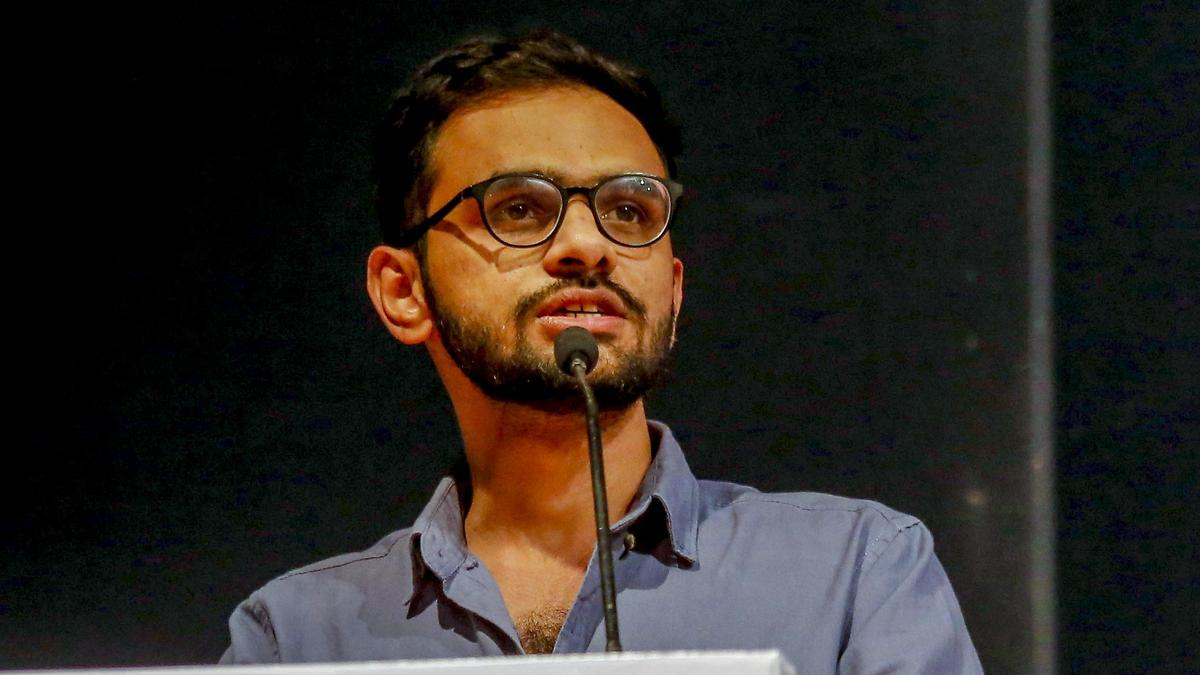
The Supreme Court on Wednesday declined to hear interim bail pleas from former JNU scholar Umar Khalid and activist Sharjeel Imam, both accused in the larger conspiracy case linked to the 2020 Delhi riots. The Bench, comprising Chief Justice of India Surya Kant and Justices Joymalya Bagchi and V. Mohana, indicated that any interim relief must await an authoritative ruling by a larger Bench of three judges on whether prolonged incarceration and trial delay can override the stringent bail curbs under the Unlawful Activities (Prevention) Act, 1967.
Senior advocates Kapil Sibal and Siddharth Dave, appearing for Mr. Khalid and Mr. Imam respectively, pressed for interim bail pending adjudication of the larger Bench reference, noting that both had been in custody for over six years. The Bench declined, stating it would have to constitute a larger Bench in light of observations made in the May 22, 2026 order in Tasleem Ahmed v. State of NCT of Delhi. Mr. Sibal pointed to that order, which granted interim bail to Tasleem Ahmed and Abdul Khalid Saifi while referring the UAPA bail question to a larger Bench, and urged similar relief for the two activists.
The Chief Justice referred to conflicting judicial interpretations of the court's 2021 ruling in Union of India v. K.A. Najeeb, in which the court held that the stringent bail embargo under Section 43D(5) of the UAPA could "melt down" where prolonged incarceration and delay in trial infringed an accused's fundamental rights. The CJI remarked that one Bench says Najeeb means one thing and another Bench says it does not, adding that the court had done its homework and gone through the January 5 judgment.
The larger Bench reference followed conflicting interpretations of the Najeeb ruling by coordinate Benches. On May 18, a Bench comprising Justices B.V. Nagarathna and Ujjal Bhuyan, while granting bail to an accused in a narco-terrorism case, held that statutory bail curbs could not eclipse the constitutional guarantees of personal liberty and speedy trial under Article 21, and expressed "serious reservations" about the January 5 judgment. The two activists have challenged a September 30 ruling of the Delhi High Court rejecting their fresh bail pleas, contending that the case remains at the stage of framing of charges and that the trial is yet to commence.